
Category: Recovery As Awakening

The spiritual path of recovery

  • Why Getting Clean Was the Beginning, Not the Destination

    Why Getting Clean Was the Beginning, Not the Destination

    We tend to mark recovery by the moment we stopped. The day we put whatever “IT” was down. The morning we woke up, for the first time in a long time, without something to be ashamed of. That moment is real, and it matters more than we can usually say.

    But there’s something that happens somewhere in the middle of doing all the right things the meetings, the steps, the check-ins, the slow reconstruction of a life that had come apart when a quiet question starts to surface. Not a dramatic one. More like a low hum in the background of an otherwise functional day.

    Is this it?

    We’re clean. We’re sober. We’re showing up. So why does something still feel unfinished?

    That question is not a warning sign. It’s an invitation.

    The immediate work of early recovery is survival work, and we shouldn’t minimize it. The white-knuckling, the phone calls at midnight, the counting of days is real, and all of it is necessary. That kind of work takes everything we have. It’s supposed to.

    But here’s the thing most of us eventually bump into: getting into recovery removes the substance. What it doesn’t automatically remove is the inner landscape that preceded the substance. The anxiety that made stillness feel unbearable. The shame we never learned to put down. The hunger for something we couldn’t name, that the drinking or using seemed, for a while, to satisfy.

    Most of us started using for a reason. Whatever that reason was — relief from pain, escape from a self we couldn’t stand, or a search for something that felt like transcendence — the substance was a counterfeit answer to a genuine question. Getting clean removes the counterfeit. It doesn’t answer the question.

    And so the question follows us into sobriety. It gets louder, actually, without the noise of using to drown it out. When survival is no longer enough and we find ourselves hungering for something more, we often assume we’ve done something wrong. That we’re broken in some new way, or that everyone else in the room has found something we haven’t.

    We haven’t failed at recovery. We’ve just arrived at where recovery was always trying to take us.

    There’s a thread that runs through many of the great contemplative traditions — Christian, Buddhist, Stoic, Sufi — that speaks of waking up. Not metaphorically. Literally: the possibility that most of us move through our lives without ever fully inhabiting them. That we go through the motions. That we react rather than respond, perform rather than live, numb rather than feel.

    We know this from the inside. We know what it’s like to be asleep. And we know — even if we can’t always name it — that getting clean isn’t the same as waking up. It’s more like opening our eyes in a dark room. Something essential has changed. But we’re still learning where we are.

    Waking up is a different kind of work. Slower. Less measurable. You can’t count the days of it or get a chip for it. It’s the work of turning toward yourself — toward the questions, the silences, the parts of your inner life you’ve been avoiding — not with self-punishment or relentless analysis, but with a kind of honest, soft attention. A willingness to see what’s actually there.

    This is what the contemplative traditions call the inner journey. Recovery, followed all the way down, is exactly that.

    The Twelve Steps aren’t about not using. They’re about excavation. They ask us to take inventory of ourselves, admit what we find, examine what drives us, practice prayer and meditation, and carry what we’ve learned into the world. That’s not a maintenance program. That’s a spiritual path.

    The Stoics had a practice of turning the attention inward: watching the movements of the mind with clarity and without flinching. The Buddhist traditions speak of insight practice: the slow, patient work of seeing things as they actually are. The Christian mystics wrote of a direct seeing beneath the surface of things, beneath the stories we tell ourselves about who we are. Different vocabularies. The same country.

    Recovery was already pointing there. The steps were already asking for this. What changes in the deeper work isn’t the direction, it’s the depth. We stop managing the surface and start paying attention to what’s underneath.

    “Most people go through their entire lives without ever experiencing a moment of genuine awareness.”

    Anthony de Mello

    It’s worth sitting with that. And then asking honestly: Have I?

    I’m not talking about awareness in some transcendent, mountaintop sense. Just the ordinary miracle of actually being here. Present to what’s moving in us. Present to what’s real. Awake to the life that’s happening right now, in this body, in this moment, with all its difficulty and all its unexpected grace.

    That’s what recovery can become, when we let it. Not the absence of a substance, but the presence of a life. A real one. Ours.

    We got clean so we could wake up. For most of us, the waking up is just getting started.

    Where in your own recovery have you started to feel that quiet hunger — the sense that staying sober, as essential as it is, isn’t quite the whole story? And what have you done, or not done, with it?
  • Surrender to Win

    Surrender to Win

    There was something I held onto for a long time. You may have your own version of it, so naming it might make this feel like my story instead of the thing underneath our stories. What I’ll say is this: I knew, for years, that I needed to let it go. I could explain why. I had walked through the reasons in prayer, in journals, in conversations with people I trusted. I understood surrender the way you understand a foreign language after learning it from Duolingo. Technically, you can speak it, but you’re not able to explain it.

    The problem with surrender is that you can talk about it indefinitely while doing the opposite. I became quite fluent in the language of letting go.

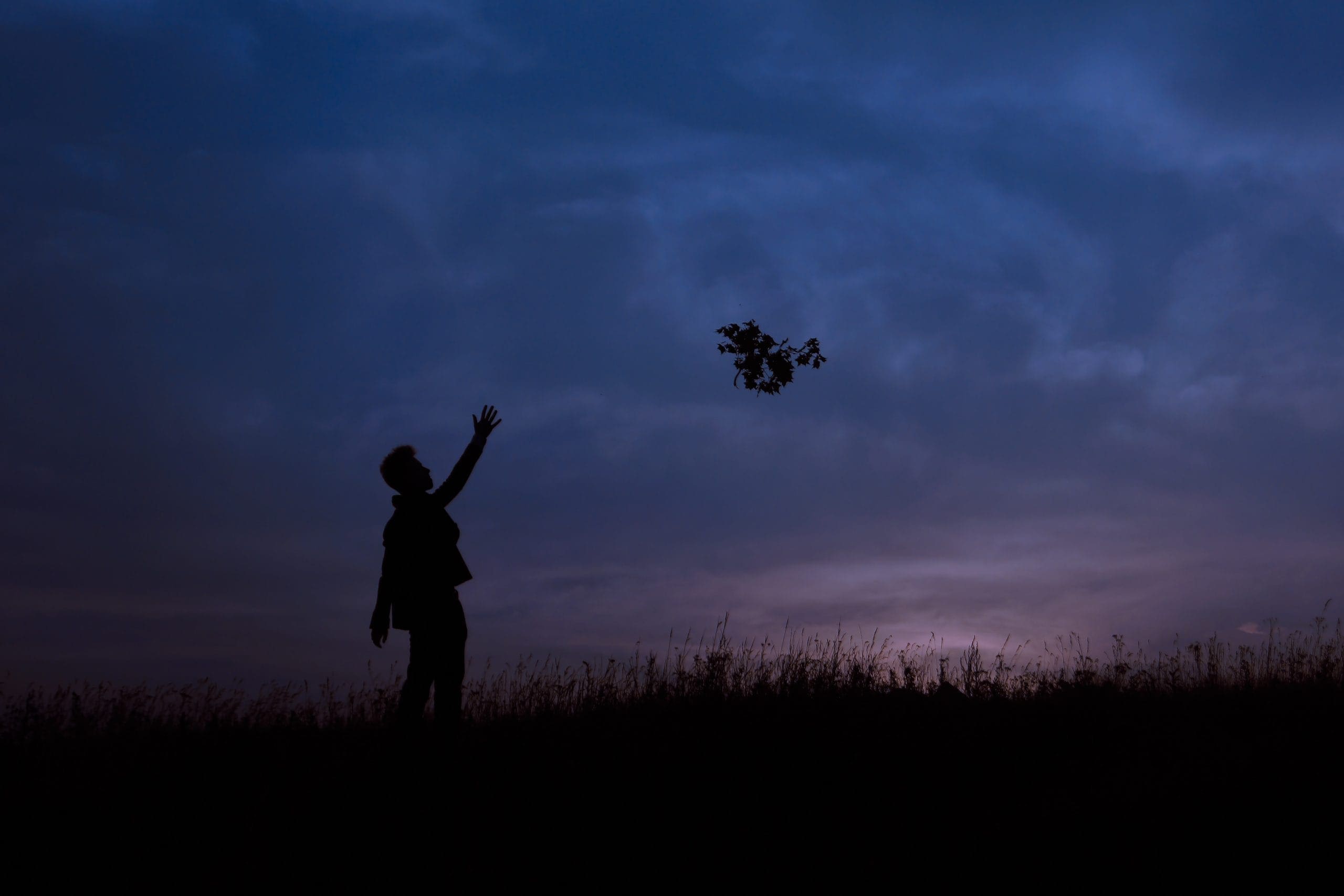
    Anthony DeMello has a line about how most people don’t want to wake up they want to dream about waking up. That landed pretty hard for me the first time I read it. Because that was exactly what I was doing. I was dreaming about surrender. Building a comfortable, well-furnished relationship with the concept of it. I said I wanted to wake up, but did I?

    Holding on doesn’t always look like clenching. Sometimes it looks like understanding. Sometimes it looks like being articulate about your problem. Sometimes it looks like explaining it to other people while you keep doing it.

    The Phrase That Never Quite Made Sense

    Surrender to win is a recovery slogan. I heard it early in recovery and it struck me as the kind of thing that sounds profound until you try to do it, at which point it reveals itself to be essentially impossible. Surrender to win. It’s a paradox, and paradoxes are easy to appreciate from a distance.

    What nobody told me, or maybe they did and I couldn’t hear it yet, is that surrender isn’t a decision you make. It’s a discovery like waking up. You don’t decide to stop fighting. You discover that you’ve been fighting something that was never going to lose, and the realization arrives not with fanfare but with a particular kind of tired.

    What That Season Looked Like

    There was a particular season somewhere in the middle of years that had already been teaching me things I hadn’t signed up to learn when I started noticing how much of my interior life was organized around something I couldn’t change. Not the dramatic varieties of uncontrollability. The quiet kind. The story I kept rehearsing. The conversation I kept having in my head. The outcome I kept trying to secure through the force of wanting it hard enough.

    I was showing up to that inner argument every day. Like a second job.

    If you look at any 12-Step program, their first step doesn’t say try harder. It talks about powerlessness and a life that had become unmanageable. It’s not describing the thing itself, the obvious problem that brought someone through the door. That the same language might apply to something quieter: what happens inside when reality doesn’t cooperate with your preferences. Everyone is powerless over something. Powerless over the outcome. Powerless over other people’s choices. Powerless, eventually, over the story you keep telling yourself about all of it. That’s a more unsettling version of the same idea. And probably the more important one.

    When Something Loosened

    I don’t remember the exact moment it shifted. That might be the most honest thing I can say about any of this.

    I was expecting a door. A definite before and after. What I got was more like a slow loosening. The grip becoming gradually less my main occupation. Less the thing I woke up thinking about.

    DeMello talks about awareness as something that does the work for you. Not that you force a transformation, but that you see clearly, and the seeing is what transforms. I used to find that frustrating. It sounded like spiritual advice for people whose problems weren’t real problems. But somewhere in that season I started to understand what he meant. Not because I had achieved clarity. Because I had gotten tired enough of the alternative.

    There’s something to be said for exhaustion as a spiritual teacher. Nobody writes about it because it’s not inspiring, but sometimes the bottom of a long effort is the first place you can actually see from.

    It’s Not a Technique

    I want to be careful here, because this is where it gets slippery. The temptation, once you’ve lived through something that resembles surrender, is to make it into a method. A sequence. Here’s what it feels like, here’s how you know it’s working.

    I have done this. I have described surrender to other people as if it were something transferable, something you could hand over wrapped and ready.

    It isn’t.

    In her book, The Top Five Regrets of the Dying, Bronnie Ware puts it this way,

    It was at that point, as I watched the high tide wash back out, that I remembered the importance of surrender, of letting go and allowing nature to weave its magic. The same force that balances the flow of the tides, the force that sees seasons come and go and creates life, was surely capable of bringing the opportunity to me I needed. I had to let go first. Trying to control the timing and outcome was a terrible waste of energy. My intentions were already out there and I had taken what action I could. My only job now was to get out of the way.

    Winning is a Byproduct?

    You don’t really surrender to win because winning is the point. Most spiritual teachers will tell you this. The winning comes as a byproduct and only after you’ve genuinely stopped trying to win. That order matters more than it looks like it does. The winning is almost beside the point. What you get isn’t victory in the sense you were originally after. It’s something quieter. A little more room. A slightly looser relationship with outcomes. A reduction in the background noise of wanting things to be different than they are.

    That’s not a small thing. After enough years of the alternative, it’s quite a lot.

    I still hold on to things. I want to be honest about that. There are still arguments I rehearse, futures I try to secure, stories I prefer over reality. The difference is that I notice it faster now. And sometimes, just noticing is enough.

    That’s closer to what DeMello was pointing at. Not a victory you achieve. A waking up you keep doing.